
What Are Developmentally Appropriate Practices (DAP), and Why They Matter in Preschool
Because Preschoolers Are Not Mini Kindergartners

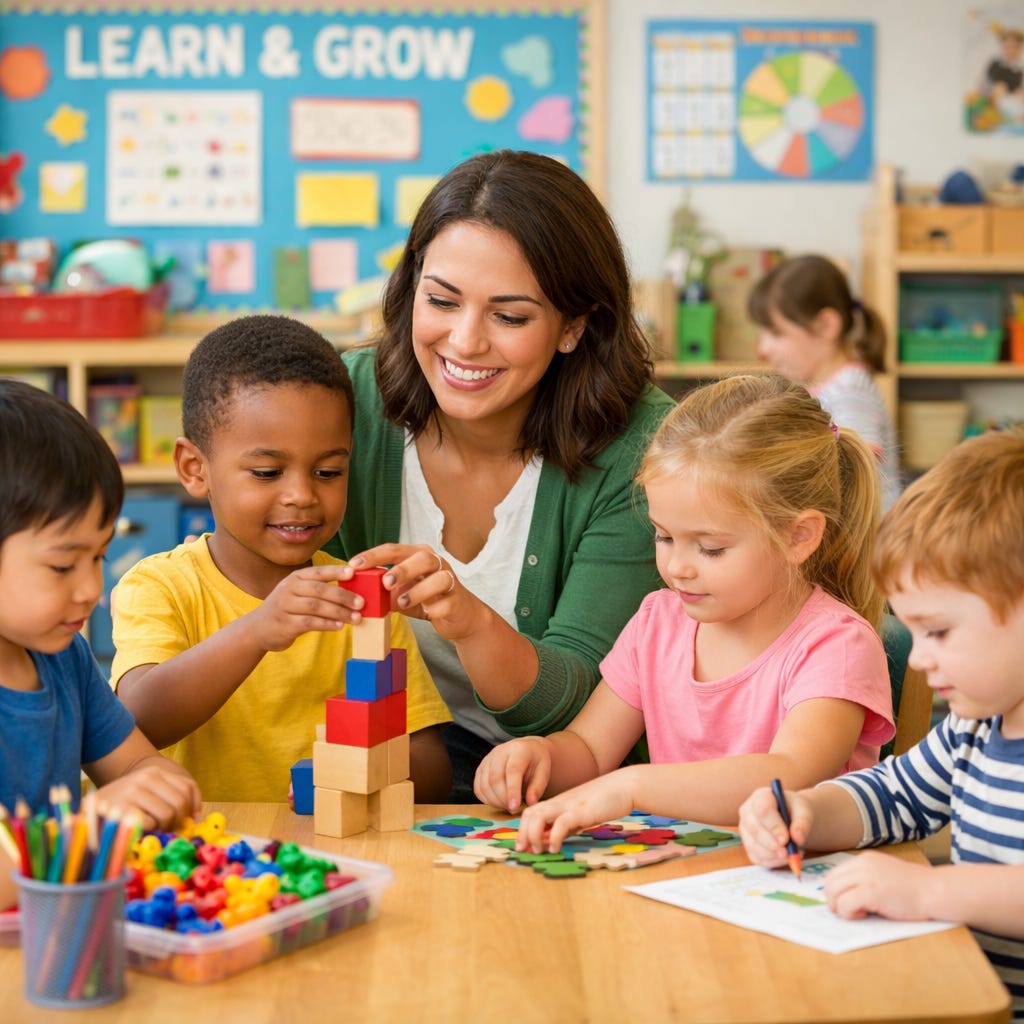
If you’ve spent any time in early childhood education or Preschool Early Intervention, you’ve likely heard the phrase “developmentally appropriate practices,” often shortened to DAP. But what does it really mean, and why is it so important for young learners?
At its core, developmentally appropriate practice is about meeting children where they are, not where we think they should be.
What Does “Developmentally Appropriate” Mean?
Developmentally appropriate practices are teaching and support strategies that are:
Based on how young children grow and learn
Responsive to individual strengths and needs
Grounded in real-life experiences and play
DAP recognizes that preschool-aged children (ages 3–5) learn best through hands-on exploration, relationships, movement, and meaningful routines, not worksheets or rigid academic expectations.
DAP Is Built on Three Key Considerations
Effective DAP always balances three things:
1. What We Know About Child Development
Young children:
Learn through play
Have short attention spans
Need repetition and routine
Are they developing language, motor, and social skills simultaneously
Expectations should align with typical preschool development, not school-age standards.
2. What We Know About the Individual Child
Every child develops at their own pace.
DAP considers:
Interests and motivations
Strengths and challenges
Communication style
Sensory and behavioral needs
Two children of the same age may need very different supports, and that’s appropriate.
3. What We Know About the Child’s Culture and Family
Children do not learn in isolation.
DAP respects:
Family values and priorities
Home language and routines
Cultural experiences
Community context
Families are partners, not outsiders.
What DAP Looks Like in a Preschool Setting
Developmentally appropriate classrooms often include:
Play-based learning (blocks, dramatic play, art, sensory exploration)
Embedded instruction during routines like snack, cleanup, and transitions
Flexible seating and movement
Visual supports and hands-on materials
Adults guiding learning through interaction, not lectures
Learning is happening, even if it doesn’t look “academic” at first glance.
DAP and Preschool Early Intervention Go Hand in Hand
In Preschool Early Intervention, DAP is essential.
Instead of isolating skills, support is
Embedded into daily activities
Delivered in natural learning environments
Focused on helping children participate, not just perform tasks
For example:
Speech goals are addressed during play and peer interactions
Motor skills are supported during movement and transitions
Social-emotional skills are practiced in real relationships
This helps skills generalize across environments, which is the ultimate goal.
What DAP Is Not
Developmentally appropriate practice is not:
Pushing kindergarten expectations onto preschoolers
Expecting all children to perform skills at the same time
Using worksheets as the primary learning tool
Prioritizing compliance over curiosity
Young children learn best when they feel safe, engaged, and valued.
Why Developmentally Appropriate Practices Matter
When DAP is implemented well:
Children are more confident and engaged
Learning feels meaningful and joyful
Challenging behaviors decrease
Skills are more likely to stick and transfer
Families feel respected and included
DAP supports the whole child, not just isolated skills.
Final Thought
Developmentally appropriate practices remind us that early childhood is not a race.
Preschool is a time to build foundations through play, relationships, and responsive teaching so children can grow into confident, capable learners.
In Preschool Early Intervention, DAP isn’t just best practice; it’s essential.